
The Future of Water Infrastructure in India
The future of water infrastructure in India depends not only on expanding access to clean water but also on ensuring reliable supply, reducing water losses, and maintaining infrastructure over the long term. As urban populations grow and rural water supply networks expand, India needs durable pipelines, efficient distribution systems, effective wastewater management, and sustainable investment in water infrastructure.
Government initiatives such as the Jal Jeevan Mission (JJM) and AMRUT 2.0 are helping shape the next phase of water supply and sanitation development. The focus is increasingly shifting from building infrastructure alone to ensuring that these systems remain functional, efficient, and sustainable.
1. Jal Jeevan Mission and the Expansion of Rural Water Supply
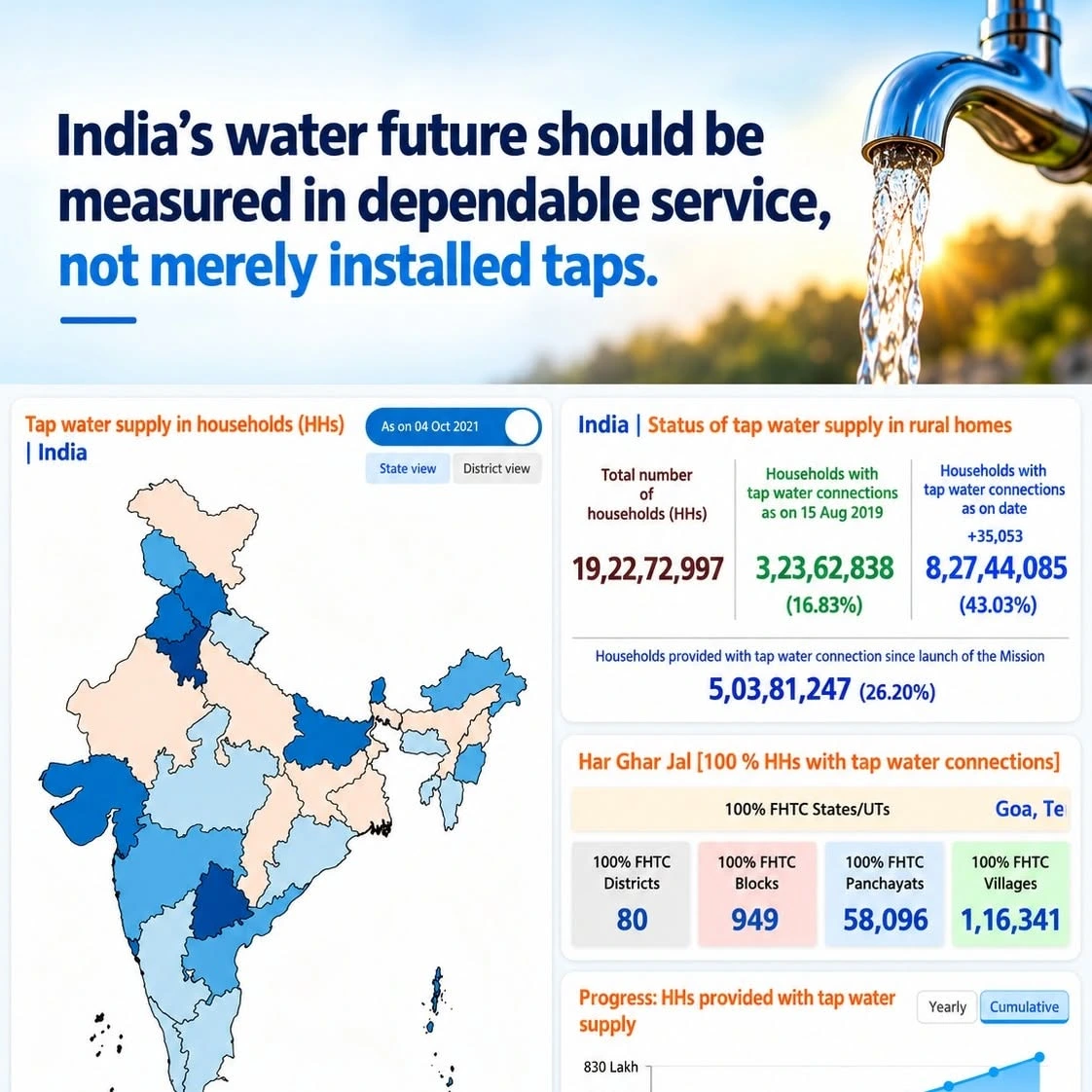
The Jal Jeevan Mission has played a significant role in expanding rural household tap water connections across India. Its next phase, Jal Jeevan Mission 2.0, places greater emphasis on sustainable service delivery, infrastructure functionality, and improved water supply governance.
In March 2026, the Union Cabinet approved the extension of the mission until December 2028, with a revised total outlay of ₹8.69 lakh crore, including ₹3.59 lakh crore in central assistance. The programme also introduces the Sujalam Bharat framework to digitally map rural water supply systems from source to tap.
These developments highlight an important priority for India's water infrastructure: ensuring that household connections translate into dependable access to safe drinking water.
Future investment should focus on completing distribution networks, maintaining existing assets, monitoring water quality, and ensuring that rural communities have access to reliable operation and maintenance services.
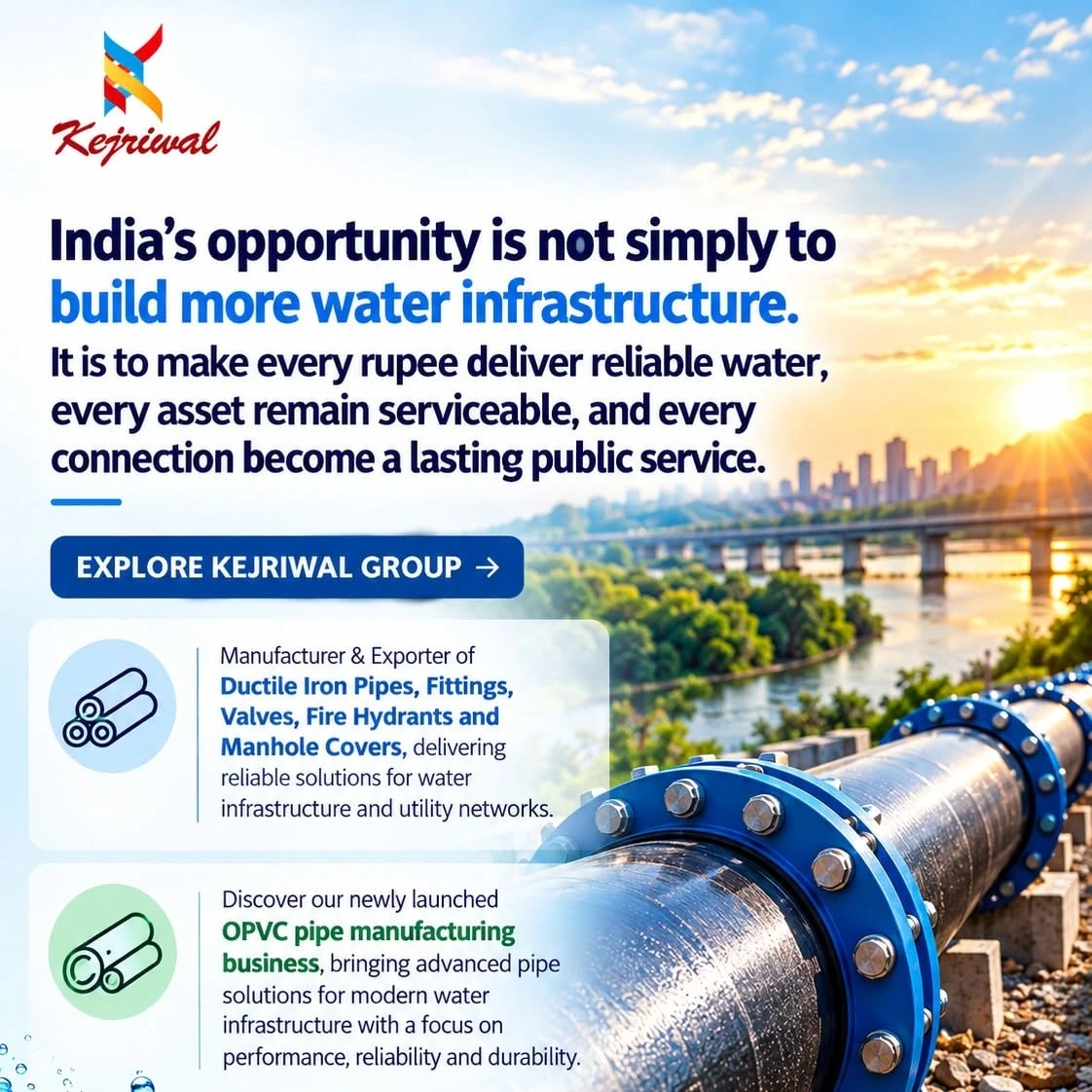
2. Modernising Urban Water Infrastructure Through AMRUT 2.0
India's urban water infrastructure faces challenges associated with population growth, ageing pipelines, rising water demand, and wastewater generation.
AMRUT 2.0 supports improvements in urban water supply, sewerage, septage management, and water body rejuvenation. Its project framework provides opportunities for cities to strengthen essential infrastructure and improve water management.
For urban local bodies, key priorities include:
Expanding reliable water supply networks
Replacing ageing and inefficient pipelines
Improving sewerage and wastewater treatment
Reducing leakage and distribution losses
Promoting wastewater reuse where appropriate
Strengthening water infrastructure monitoring
The success of urban water infrastructure projects should be assessed not only through approved budgets and construction milestones but also through service continuity, water quality, operational efficiency, and long-term asset performance.
3. Reducing Non-Revenue Water Through Better Pipeline Infrastructure
Non-Revenue Water (NRW) is one of the major challenges facing water utilities. It includes physical water losses from leakage, apparent losses caused by metering inaccuracies or unauthorised consumption, and certain authorised but unbilled uses.
When treated water is lost before reaching customers, utilities may face higher pumping and treatment costs, reduced revenue, and increased pressure on existing water resources.
Reducing NRW requires a combination of reliable pipeline materials, proper installation, pressure management, leak detection, and accurate metering.
Important measures include:
Replacing deteriorated pipelines
Installing reliable, leak-resistant pipe joints
Monitoring pressure across distribution zones
Detecting underground leaks at an early stage
Improving water metering and billing systems
Conducting regular pipeline inspections
Durable pipeline systems, including appropriately specified Ductile Iron (DI) pipes, can support long-term network reliability. However, actual water loss reduction depends on the complete system design, installation quality, operating conditions, and maintenance practices.
4. The Role of Ductile Iron Pipes in Future Water Infrastructure
Pipeline material selection is a critical decision in water transmission and distribution projects. Pipes must withstand operating pressure, external loads, environmental conditions, and the demands of long-term service.
Ductile Iron pipes are widely used in water infrastructure because of their mechanical strength, ductility, established jointing systems, and availability of internal linings and external corrosion protection.
Key advantages for suitable applications include:
Strength and Durability: DI pipes provide robust mechanical performance when correctly specified for the project's operating conditions.
Reliable Jointing Systems: Suitable gasketed and restrained joints can help maintain pipeline integrity and reduce leakage risks.
Corrosion Protection: Appropriate coatings, linings, and supplementary protection can help manage corrosion in different environments.
Long-Term Value: Evaluating maintenance, repairs, installation, and replacement alongside the initial purchase price helps determine lifecycle cost.
Established Installation Practices: Standardised components and recognised construction procedures support pipeline installation and maintenance.
For future water infrastructure projects, engineers and procurement teams should consider technical suitability, applicable standards, installation conditions, expected service life, and total lifecycle cost rather than focusing exclusively on the initial material price.
5. Smart Water Management and Digital Monitoring
Digital technology is becoming increasingly important in modern water infrastructure. Monitoring systems can help utilities understand how water moves through their networks and identify operational problems before they become major failures.
Emerging and established solutions include:
Smart water meters
Pressure and flow monitoring sensors
District Metered Areas (DMAs)
Acoustic leak detection
Digital pipeline asset mapping
Remote monitoring and control systems
Data-driven maintenance planning
These technologies can help identify unusual consumption patterns, locate potential leakage, improve pressure management, and support more informed maintenance decisions.
Digital systems are most effective when utilities have reliable field data, trained personnel, clear operating procedures, and the resources to act on the information collected.
6. Wastewater Treatment and Water Reuse
The future of water infrastructure in India also depends on managing wastewater more effectively. As cities expand, wastewater treatment and reuse can help reduce pressure on freshwater sources.
Treated wastewater may be suitable for applications such as industrial processes, landscaping, irrigation, and certain non-potable municipal uses, depending on treatment quality and applicable regulations.
Key priorities include:
Expanding wastewater treatment capacity
Improving sewerage network coverage
Maintaining treatment plant performance
Developing suitable wastewater reuse systems
Monitoring treated water quality
Supporting safe reuse through appropriate infrastructure
Integrating wastewater management with urban planning can help cities use water resources more efficiently and build greater resilience against water scarcity.
7. Sustainable Water Infrastructure and Climate Resilience
Climate variability, changing rainfall patterns, groundwater stress, and rising demand make sustainable water infrastructure increasingly important.
Future projects should consider not only current demand but also how infrastructure will perform under changing environmental conditions.
Important strategies include:
Protecting surface water and groundwater sources
Promoting rainwater harvesting where suitable
Improving water conservation practices
Reducing physical water losses
Reusing treated wastewater
Designing infrastructure for local environmental conditions
Maintaining emergency response and contingency plans
Durable materials, appropriate engineering, preventive maintenance, and effective water resource management can contribute to more resilient water supply systems.
8. Why Lifecycle Cost and Maintenance Matter
Building new infrastructure is only one part of delivering reliable water services. Pipelines, valves, pumps, reservoirs, and treatment facilities must continue operating effectively after construction is completed.
A lifecycle cost assessment considers the wider financial impact of an asset, including:
Initial procurement and installation
Energy consumption
Routine maintenance
Repairs and service interruptions
Corrosion protection
Expected service life
Replacement requirements
Procurement decisions based only on the lowest initial purchase price may overlook important long-term costs. A more comprehensive approach evaluates technical performance, reliability, maintainability, and total ownership cost.
Governments, contractors, consultants, and utilities should also prioritise predictable funding, timely project payments, trained maintenance teams, and dedicated budgets for asset upkeep.
9. Measuring the Success of India's Water Infrastructure Projects
The effectiveness of water infrastructure investment should be measured by the quality and reliability of services delivered to households and businesses.
Useful performance indicators include:
Continuity and availability of water supply
Compliance with drinking water quality requirements
Frequency of pipeline failures
Non-Revenue Water levels
Energy and operating costs
Wastewater treatment and reuse performance
Maintenance response times
Long-term functionality of completed assets
Transparent reporting of these indicators can help utilities identify weaknesses, improve accountability, and make better decisions about future investment.
The goal should be to ensure that infrastructure remains functional long after construction is completed and that communities receive dependable water services.
Conclusion: Building a Reliable Future for Water Infrastructure in India
The future of water infrastructure in India will depend on combining infrastructure expansion with reliable service delivery, effective maintenance, digital monitoring, and sustainable water resource management.
Initiatives such as Jal Jeevan Mission 2.0 and AMRUT 2.0 provide an important framework for improving rural and urban water systems. However, lasting progress will require continued investment in reliable pipelines, leakage reduction, wastewater reuse, corrosion protection, and long-term asset management.
For engineers, infrastructure developers, contractors, and water utilities, the priority should be to select suitable materials, apply sound engineering practices, and evaluate projects through their long-term performance and lifecycle cost.
India's water infrastructure future is not just about building more connections. It is about delivering safe, reliable, and sustainable water services for generations to come.